 Virtual Colossus
The history of the cipher machine
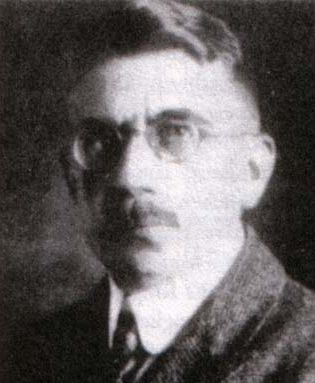
The Enigma machine was invented by Arthur Scherbius in 1918, as a device for companies to encrypt their information. The name Enigma doesn’t refer to one specific machine, but to a range of rotor-based cipher machines that grew more complex over its lifetime.
For more information, in a lot more detail, I recommend a visit to www.cryptomuseum.com.
Printing models
Die Handelsmaschine, 1923
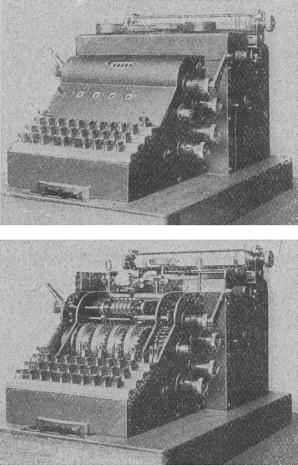
Die Handelsmaschine (the commercial or trade machine) was the first cipher machine to be sold commercially under the name Enigma. It was quite a large, bulky device with four non-removable cipher wheels, each with 28 contacts on each side.
The machine could be switched between enciphering, deciphering and plain text (so it could be used as an ordinary typewriter). It was replaced by a newer printing Enigma in 1926. There are no known surviving examples of this model.
Die schreibende Enigma, 1924–1926
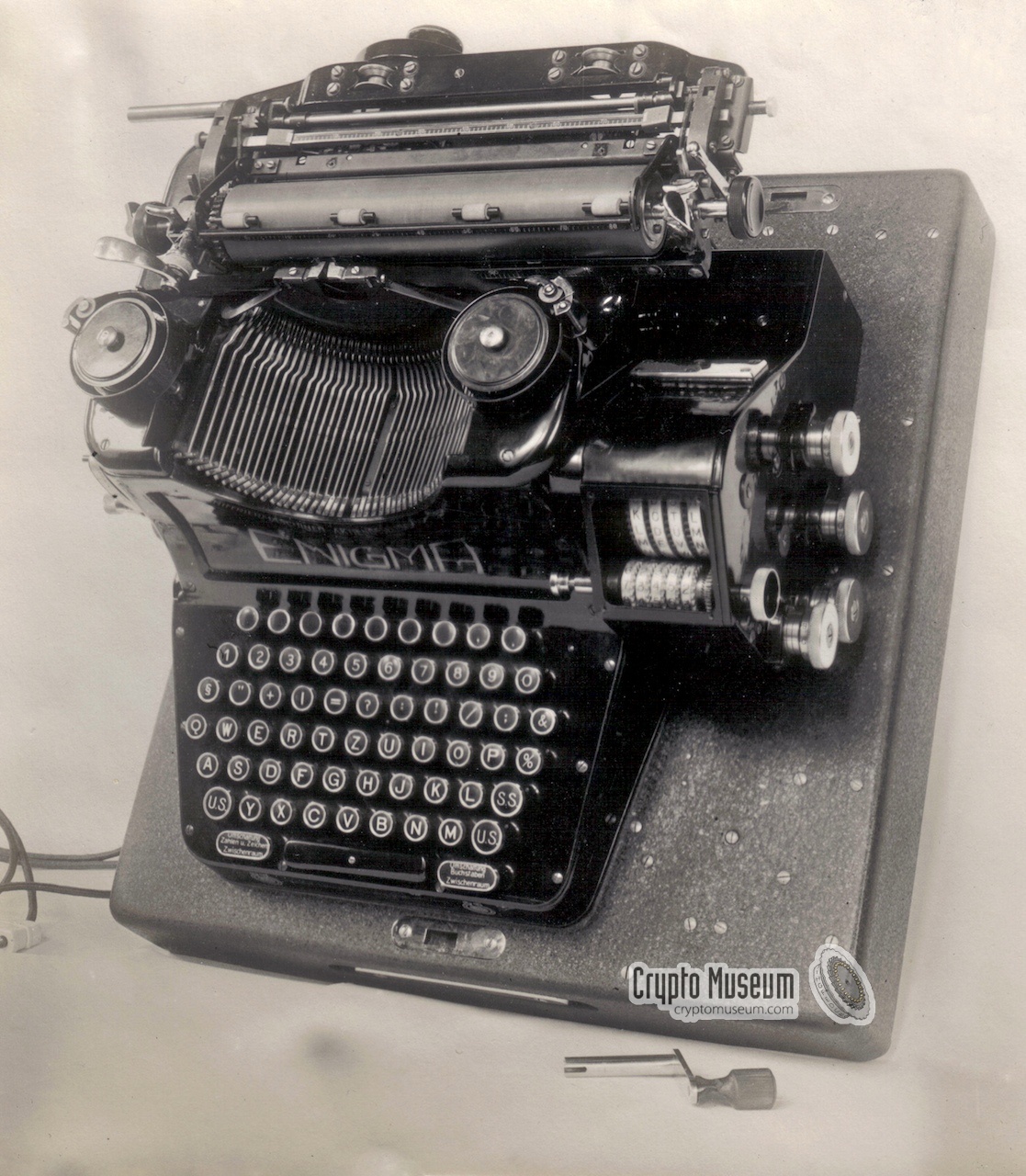
Die schreibende Enigma (the printing Enigma) replaced the Handelsmaschine in 1924. It had a mechanism like a typewriter, with type bars rather than the Handelsmaschine’s rotating print wheel. It had 60 keys and a clever way of switching between letters and numbers or symbols while still enciphering with just the letters A–Z on its four non-removable cipher wheels.
Because of production and reliability problems, it was not released until 1926 and, with its high price, probably did not sell many. In 1929 the final printing model, the Enigma H29, replaced it. In the meantime, from 1924, a newer model using lamps rather than printing quickly took over from the printing machines.
Enigma H29, 1929
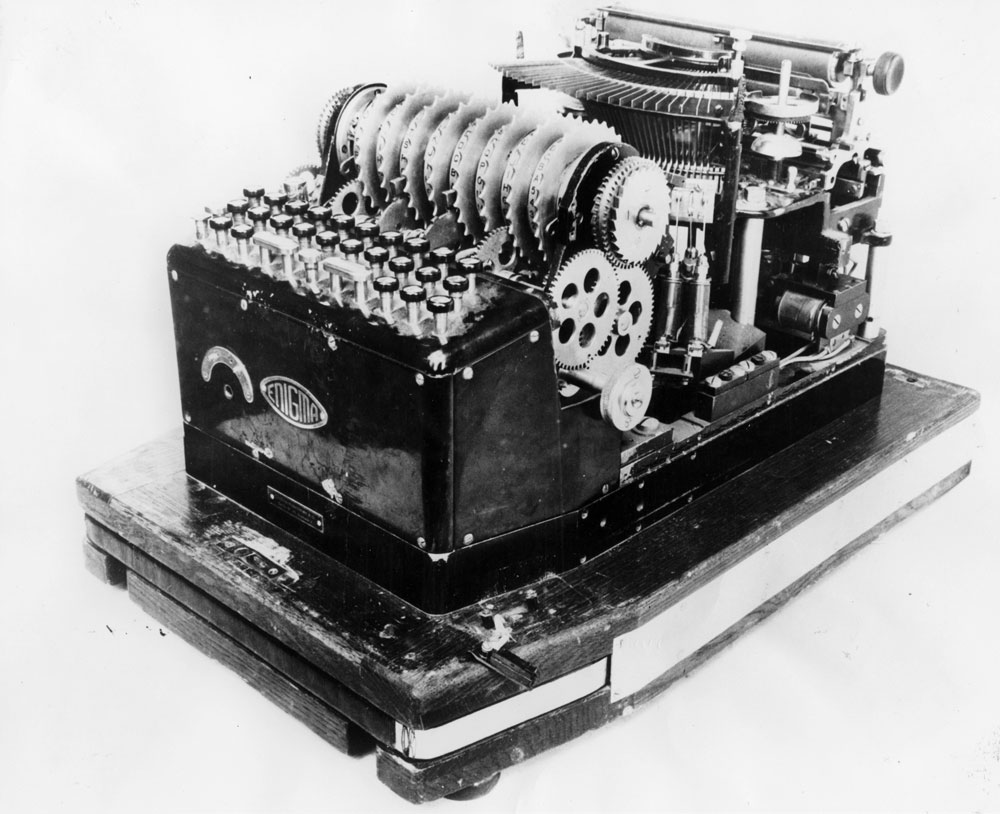
The Enigma H29 was the last of the printing Enigma machines. Introduced in 1929, it had eight cipher wheels: four used to encipher the message and the other four controlling how the rotors turned over.
A large machine weighing nearly 60 kg, it was not very portable and had many reliability problems. It was soon replaced by the more popular lamp-based machines, which were much smaller, lighter and cheaper.
Glowlamp models
Enigma A
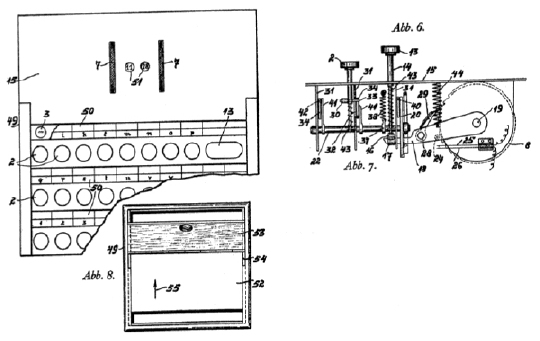
Enigma A was the first of the glowlamp machines, introduced in 1924. There doesn’t appear to be a photo of this machine, as it was succeeded by Enigma B in the same year, but it is described in patent DE407804, which gives an idea of how it looked.
At first it had two main rotors as well as the reflector. Later changes allowed the UKW reflector to be turned by hand to any of its 26 positions. The 26 keys were in two rows, with the lamps above each row. The keys and lamp panel were left blank so customers could write their own letters or numbers on them. After each key was pressed, a larger key marked “Antriebstaste” (driving button) had to be pressed to actually turn the rightmost rotor.
Enigma B
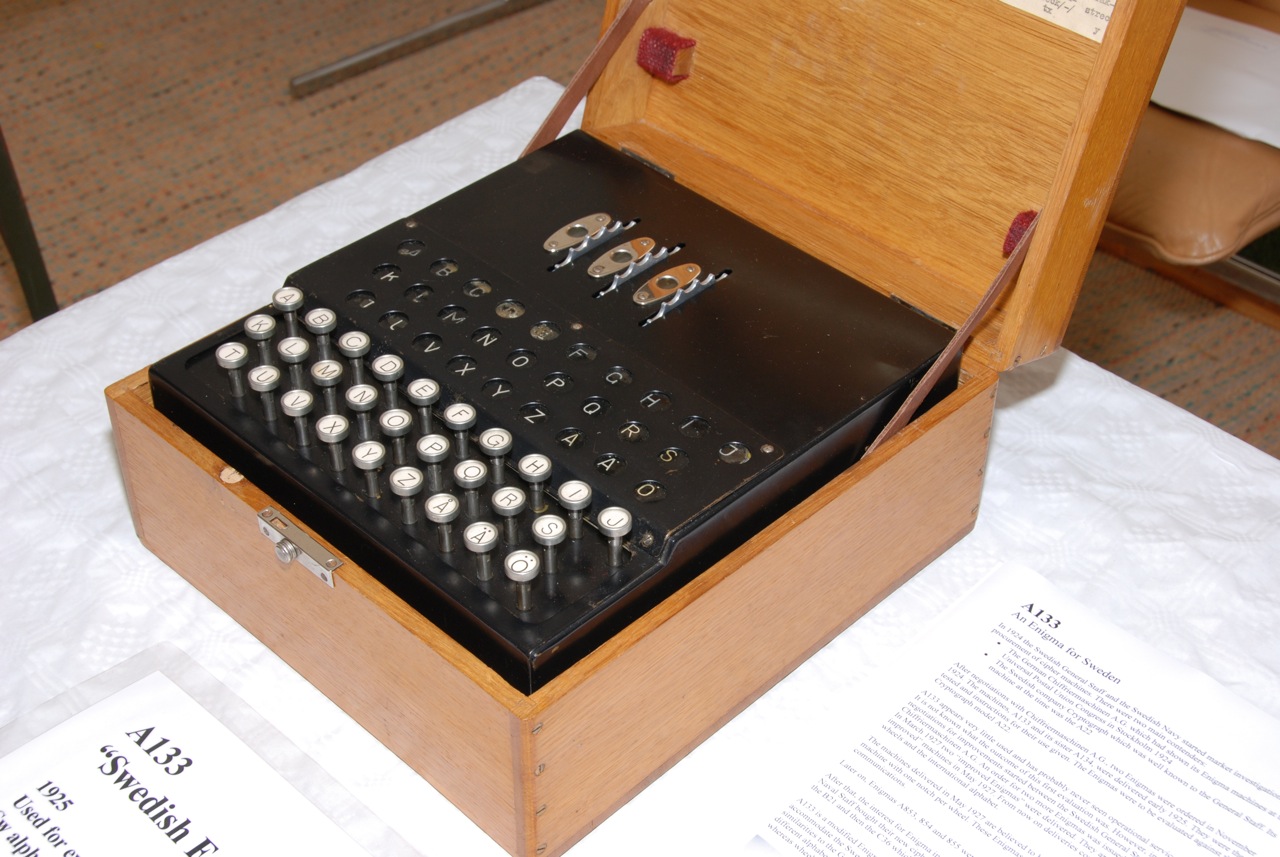
Enigma B improved on the A model in a number of ways and was first introduced in late 1924. There are two versions. The early one had two rows of keys at the front, with the rotors in the centre and the lamp panel now at the back. This version was also supplied to the Swedish General Staff with 28 keys and 28 positions on each rotor, with the W removed and the extra characters Å, Ä and Ö added. It had two rotors plus a movable UKW reflector, which also moved when the second rotor’s notch moved it. The separate button for moving the rotors was gone: each key now moved the rotor before making the electrical connection.
The second version was much more like the Enigma layout we mostly see, with the lampboard between the keyboard and the rotors at the back, and the keys and lamps laid out in the more familiar three rows. It had two rotors (with either 26 or 28 positions) marked with numbers and a third marked with letters (A–Z or A–Ö), and swapped the movable reflector for a fixed internal one. It was also the first machine whose three main rotors could be removed and their places swapped, giving a further 6 different orders in which they could be set. Another first was the Ringstellung (ring setting), which meant the ring engraved with numbers or letters could be turned relative to the wiring.
Enigma C
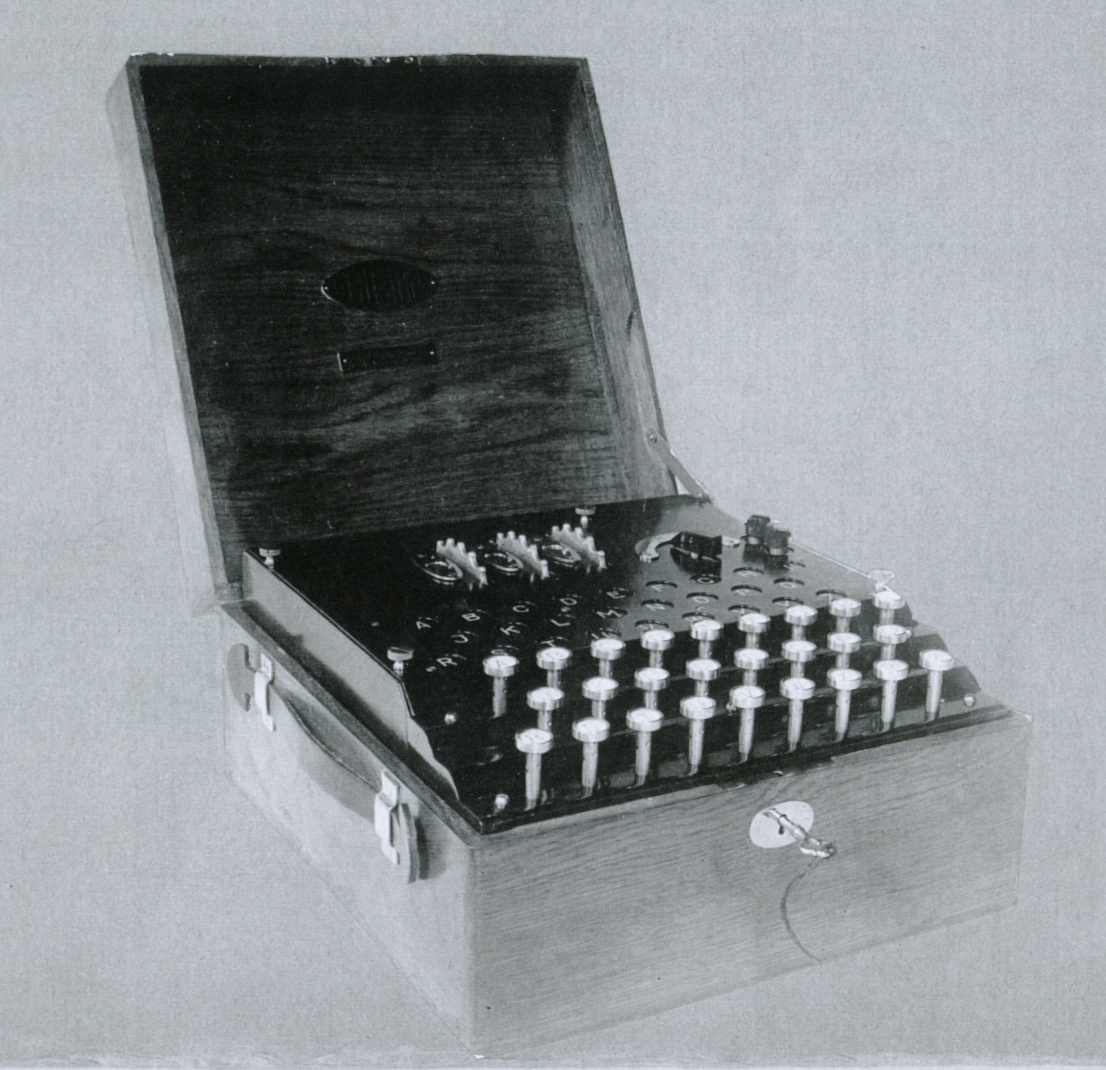
Enigma C replaced model B from late 1924. It is very similar to the second version of Enigma B, with a few improvements: three moving rotors, each numbered 1–26, with a fixed UKW. Each row of the keyboard is stepped up to make typing easier. A power switch and external terminals were added, so it could run either from its internal battery or from an external 4 V supply, and the battery setting could switch the lampboard between bright and dark. This is the last Enigma model with the keyboard in alphabetical order rather than the typewriter layout (QWERTZ) found on later machines.
Enigma D and K
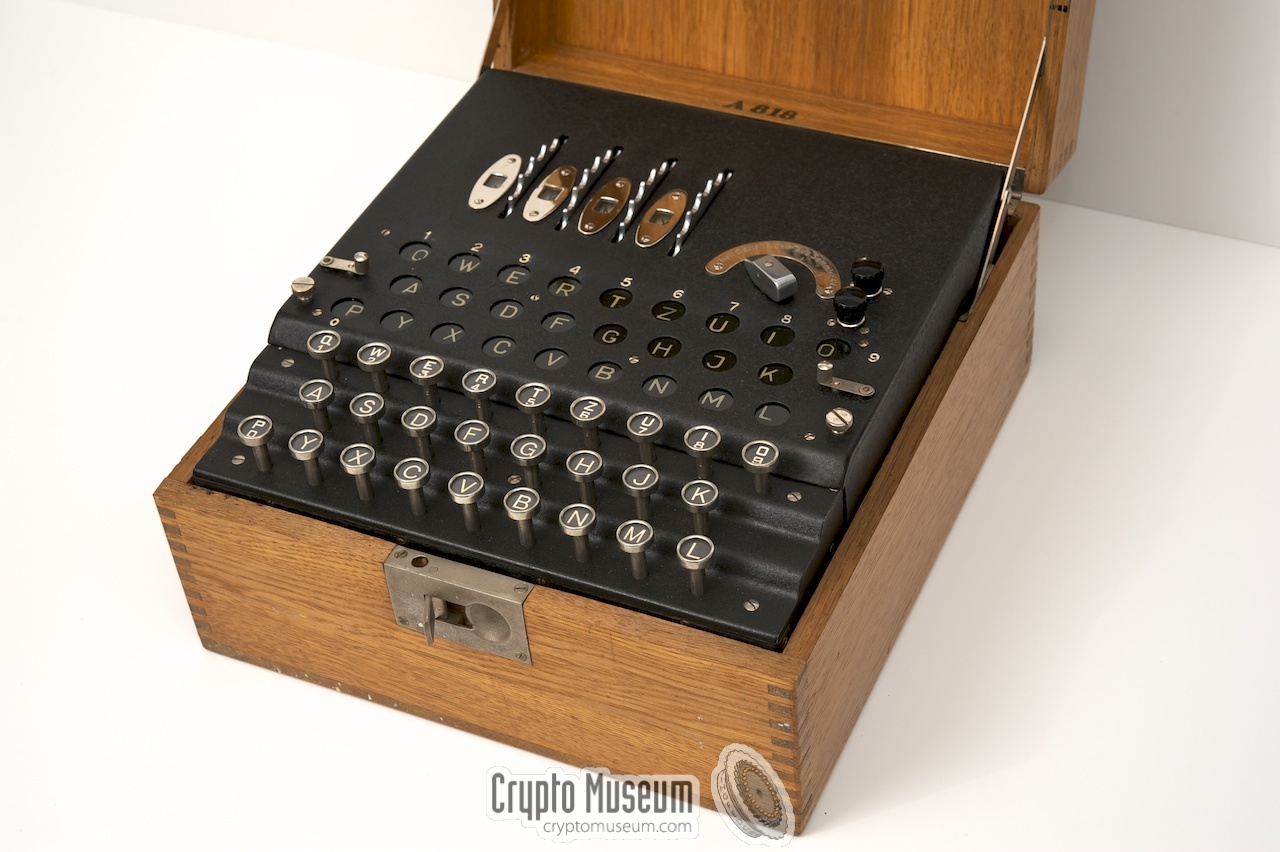
In 1926 the Enigma D was developed to replace the C model. Improvements included a hinged top lid with two screws to reach the rotors, instead of the earlier removable lid with four, and a keyboard in the German typewriter QWERTZ layout. This was the main commercial machine and came with a standard set of three rotors.
Looking at the picture, it’s easy to assume this is a 4-wheel machine, but it is in fact a 3-wheel machine with a settable UKW reflector.
The Enigma K was a commercial machine introduced in 1927. Apart from a few minor manufacturing differences, it was generally identical to the Enigma D. A number of variants of the Enigma K were produced in later years, with rotors with more turnover notches and different wiring depending on the customer’s requirements.
Military models
Enigma I
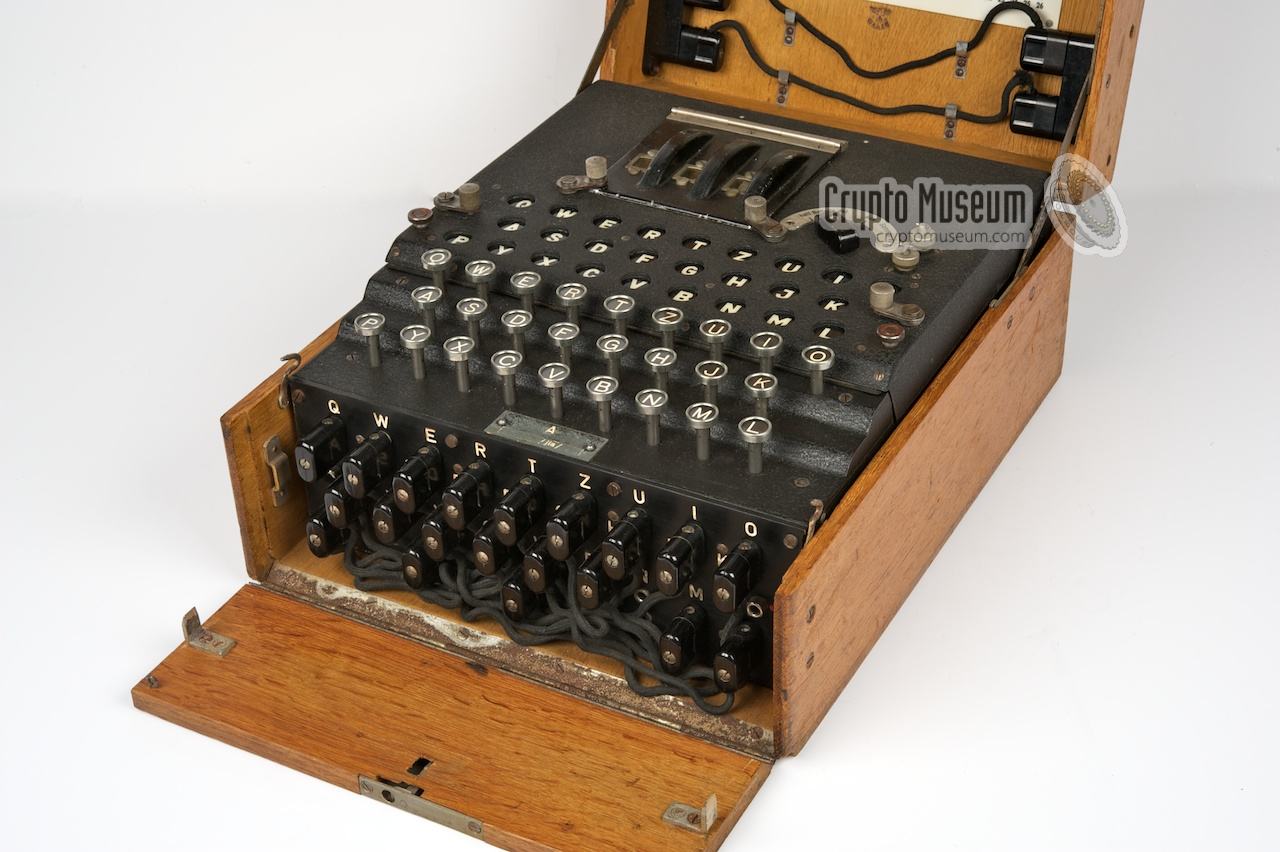
This is one of the two machines simulated in Virtual Enigma.
In 1926 the German Army (the Reichswehr, later the Wehrmacht) began to take an interest in the Enigma machine and asked for a special variant of the Enigma D. The prototype, ready in 1927, had three removable rotors and a fixed reflector (UKW), but added a plugboard (the Steckerbrett) on the front, which increased its cryptographic security by an order of magnitude.
The Enigma I (a Roman numeral one, so pronounced Enigma Eins or Enigma One rather than the letter I) was available only to the Army, with the wiring of the rotors, the reflector and the plugboard being exclusive to the military machines. It was first supplied with three rotors; from December 1938 two more were available, giving a choice of five, with the other two kept in a wooden storage box.
The Steckerbrett went through a number of versions. At first it used 26 single cables to swap letters, but the final version used double-ended plugs with two contacts. Plugged between two sockets, a cable swapped the two letters over. See the Enigma Steckerbrett at cryptomuseum.com.

Enigma M1, M2 and M3
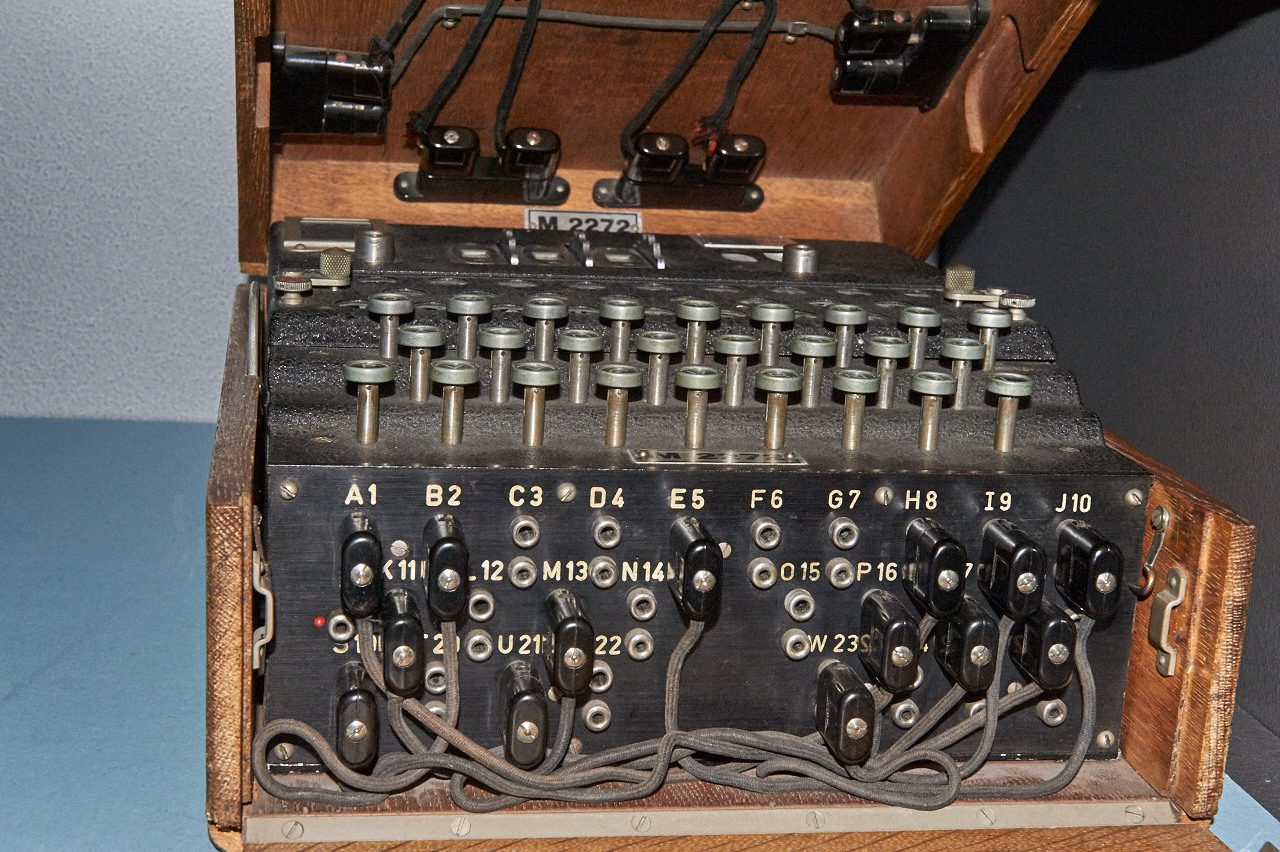
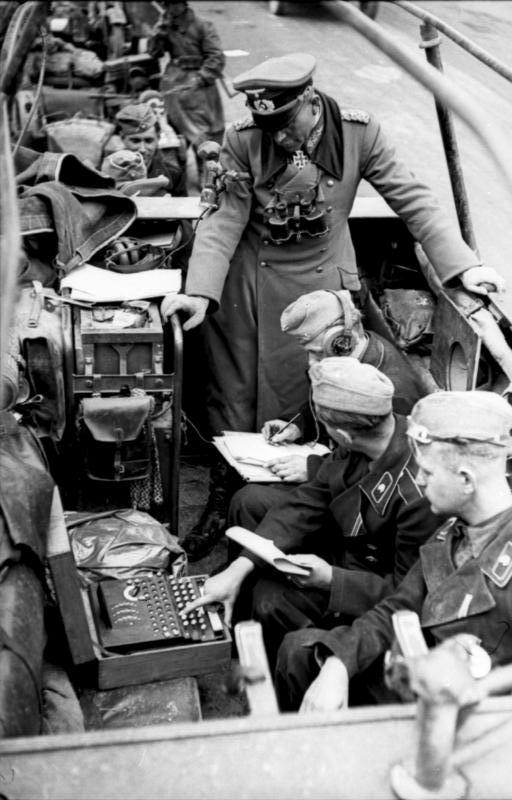
The M1, M2 and M3 were used by the German Navy from 1934 onwards and were all 3-rotor models. They were compatible with the Army’s Enigma I, as the first five rotors had the same internal wiring and notch positions. Each version had a few manufacturing differences but they were generally the same. They had a smaller battery, to make room for a 4 V connector that could take a plug direct from the ship’s power. The rotors all have the letters A–Z around the edge rather than the numbers found on earlier machines.
Exclusively for the Kriegsmarine, three more rotors were supplied (VI, VII and VIII), each with two notches opposite each other rather than the single notch on all the other rotors. This made it possible to send secure messages that could not be read by the Army or ordinary Navy units. Another difference on the rotors was a pair of spring-loaded levers in place of the sprung pin used on the Enigma I. Both levers had to be pressed together to set the ring position.
Enigma M4
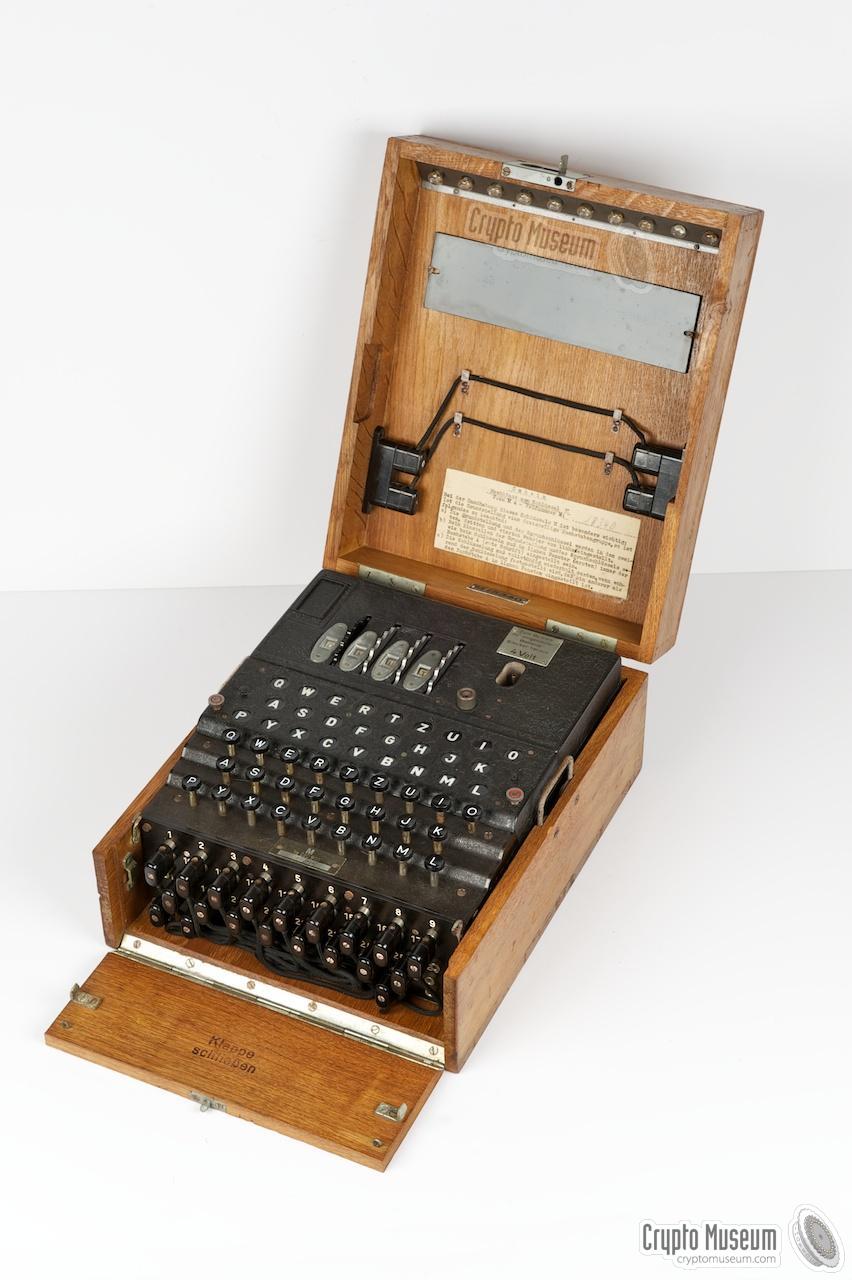
This is one of the two machines simulated in Virtual Enigma.
The Enigma M4 is the next model after the M3. It was used by some divisions of the German Navy (Kriegsmarine) from 1942, on both U-boats and battleships. It added another rotor, making four in the scrambler, which made it a formidable challenge to break. The 4 in the name isn’t because it has four rotors; it is simply the next in the series.
Eight rotors (I to VIII) were supplied, identical to those of the M1 to M3. The first five were compatible with the original Enigma I rotors (they would even work in that machine if fitted), and the other three were wired the same as on the M1–M3.
To make room for the extra rotor (the Zusatzwalze), the UKW reflector was made thinner, and the extra rotor, also a thin one, was fitted to the left of the usual three. Two of these thin fourth wheels were supplied, named Beta and Gamma, but they could not be used in place of the eight standard rotors. They looked like the normal rotors but used the spring-pin method of changing the ring position rather than the M1–M4 levers. The fourth wheel could be set at the start, but did not turn during encipherment.
The thin UKW also came in two versions, named b and c; note the lower-case letters, to tell them apart from the normal B and C reflectors. These thin reflectors were wired differently from the Enigma I versions, but the b reflector used with the Beta rotor set to A was compatible with the normal Enigma I UKW B. Likewise the c reflector with the Gamma rotor was compatible with the standard UKW C, so messages could pass between the different machines.
Find out more
This is just a brief overview of the main Enigma models. For much more detail, photos and the other models that were made, please visit cryptomuseum.com. (Can you tell it’s one of my favourite sites on the web?)
Next: how did Enigma work?